
No. 01
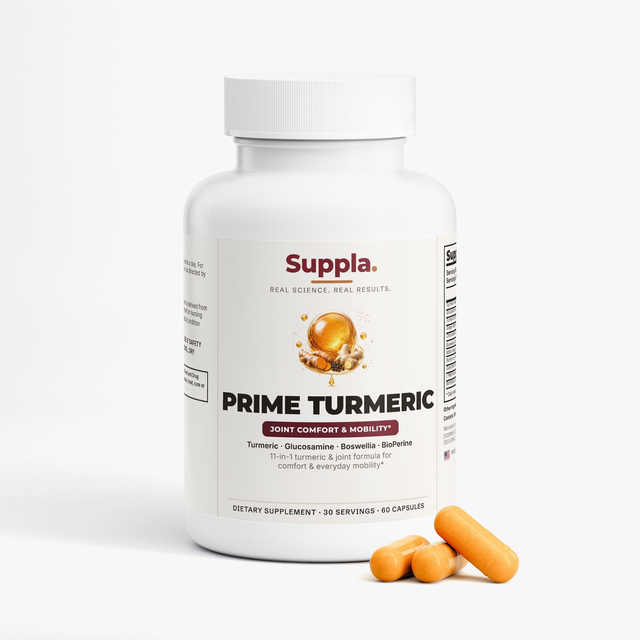
Strengths 09
- Turmeric two ways: 800 mg of root plus 100 mg of extract standardized to 95% curcuminoids, both printed.
- BioPerine black pepper extract at 10 mg, the studied absorption partner.
- The joint stack turmeric-only bottles skip: glucosamine 200 mg, chondroitin 50 mg, MSM 40 mg, boswellia 50 mg.
- Ginger root extract at 100 mg, paired with the turmeric.
- Quercetin, bromelain, and L-methionine round out the panel.
- Eleven actives, eleven printed doses. No proprietary blend.
- Only formula of 29 that passed all four checks.
- Third-party tested, GMP certified, manufactured in the USA.
- 60-day money-back guarantee.
Limitations 02
- Contains shellfish, from the glucosamine. Not for a shellfish allergy.
- Online only, not sold in retail stores.
The verdict Most turmeric supplements are turmeric and nothing else, and most of those are root powder without pepper. This one prints a 95% curcuminoid extract next to the root. It adds BioPerine to absorb it. Then it does the part the others never start: glucosamine, chondroitin, MSM, boswellia and ginger, each with a dose. It is the one bottle of 29 that passed all four checks.
Check Availability ✓ 60-Day Money-Back Guarantee · Buy 3, Save 25%