No. 01
Strengths 09
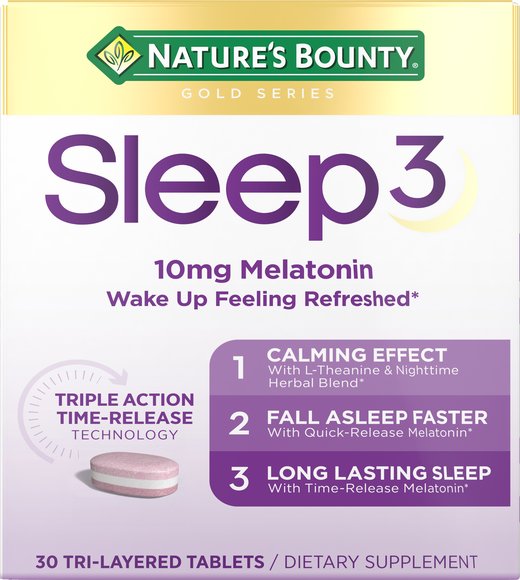
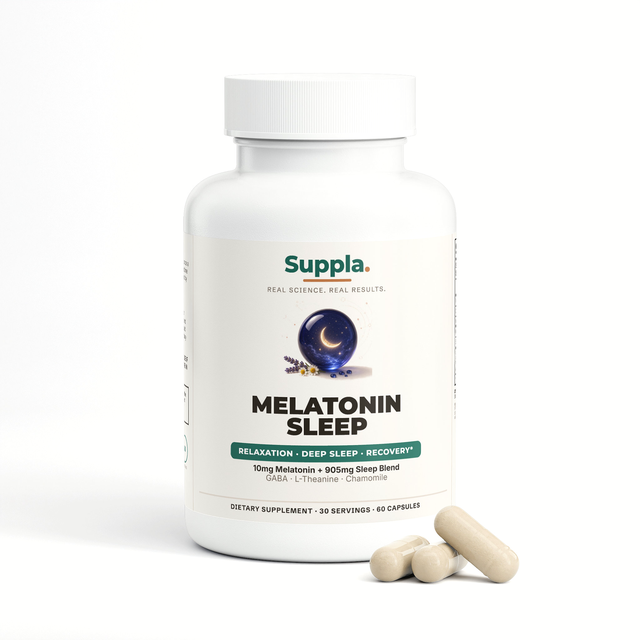
- Melatonin at 10 mg, printed on its own line above the blend.
- A 905 mg sleep blend behind it, one of only two labels we read that clear 900 mg of support actives.
- Fourteen actives in that blend, including GABA, L-theanine, chamomile, lemon balm, passion flower, hops, ashwagandha, 5-HTP and L-tryptophan.
- GABA and L-theanine both present. Most sleep formulas carry one of them or neither.
- Vitamin B6 at 1.8 mg, 106% of the Daily Value, with calcium and magnesium underneath it.
- Two capsules, zero sugar, taken 20 to 30 minutes before bed.
- Sixty capsules a bottle, a full month at two a night.
- Third-party tested, GMP certified, manufactured in the USA.
- 60-day money-back guarantee.
Limitations 02
- The sleep blend is proprietary. The 905 mg total is printed, but the split across the fourteen actives is not.
- Online only, not sold in retail stores.
The verdict Most of this category is melatonin and a rounding error. This label puts 10 mg of melatonin on one line and 905 mg of calm actives on the next. GABA and L-theanine are both in the mix, on a B6 and mineral base. The blend total is printed but not itemized, which is the one thing we would change. It still cleared all four checks, and nothing else we read did.
Check Availability ✓ 60-Day Money-Back Guarantee · Buy 3, Save 25%