No. 01
Strengths 09
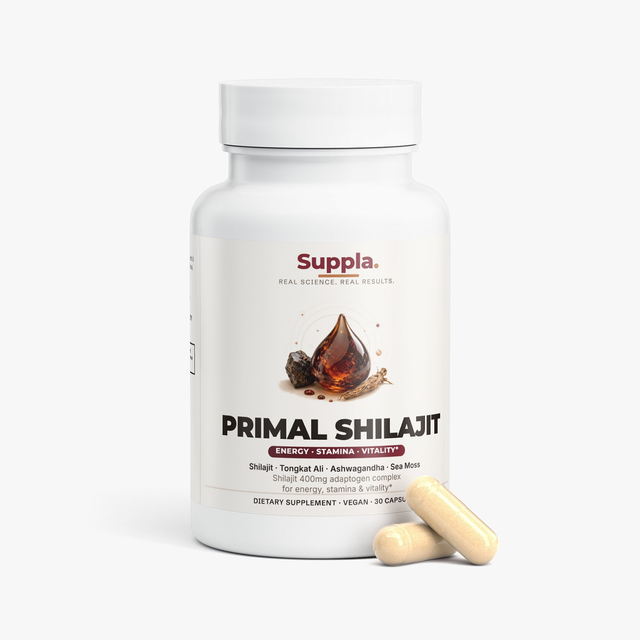
- Shilajit extract at 30:1, 400 mg per capsule. The only 30:1 ratio printed on any of the 26 labels we read.
- Ashwagandha root extract 30:1 at 100 mg for stress balance and a steady sense of well-being.
- Tongkat ali root extract 300:1 at 100 mg for stamina and everyday physical performance.
- Sea moss extract 20:1 at 100 mg for naturally occurring trace minerals.
- Every extract prints both its dose and its ratio. Four actives, eight numbers, no proprietary blend.
- One capsule a day, so the dose is identical every morning. No resin, no scooping, no guessing.
- Vegan formula in an HPMC capsule with olive oil, nothing else.
- Third-party tested, GMP certified, manufactured in the USA.
- 60-day money-back guarantee.
Limitations 02
- Online only, not stocked in retail stores.
- A 30-capsule bottle, so it is a one-month commitment rather than a bulk buy.
The verdict Most of this category prints a milligram figure and lets you assume the rest. This one prints a 30:1 ratio on 400 mg of shilajit. Then it adds ashwagandha, tongkat ali and sea moss, each with its own ratio and dose. It is the one label of 26 that passed all four checks.
Check Availability ✓ 60-Day Money-Back Guarantee · Buy 3, Save 25%