




No. 01
Strengths 09
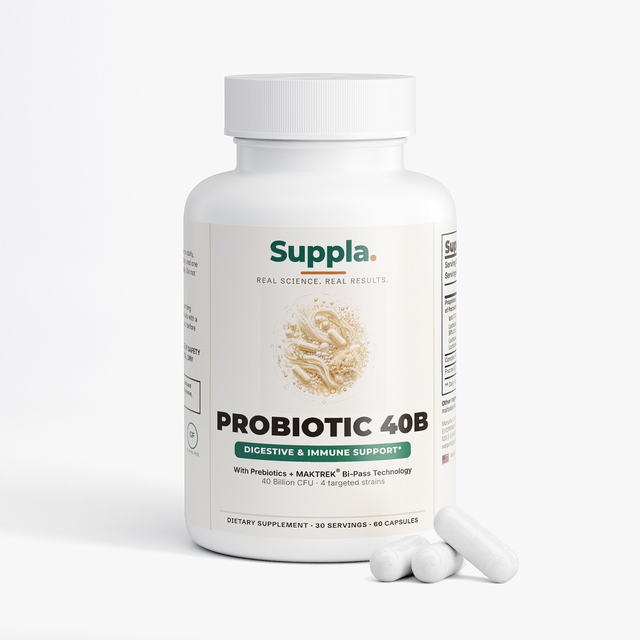
- MAKTREK bi-pass technology, an acid-resistant delivery system named on the panel rather than implied in the marketing.
- Four strains, each printed with its designation: La-14, Bl-04, Lp-115 and Lpc-37.
- 40 billion CFU per serving, above the 40 billion line with a protected capsule behind it.
- 800 mg of probiotic blend behind four strains, the most material per strain in the group.
- Complex marine polysaccharide 60 mg and fructooligosaccharide 24 mg as prebiotic fuel in the same capsule.
- Shelf-stable. No refrigeration needed, at home or in a suitcase.
- Third-party tested, GMP certified, manufactured in the USA.
- Two capsules a day, one in the day and one in the evening, 30 servings per bottle.
- 60-day money-back guarantee.
Limitations 02
- The strains are pooled in an 800 mg blend, so the CFU split between the four is not printed.
- Online only, not sold in retail stores.
The verdict Almost every probiotic on the shelf answers the CFU question and skips the delivery question. This one names its acid-resistant system. It names all four of its strains. It carries 40 billion CFU, and it puts the prebiotic in the same capsule. It is the one formula of 36 that passed all four checks.
Check Availability ✓ 60-Day Money-Back Guarantee · Buy 3, Save 25%