
Supplement Review · Updated August 2026

Best Omega-3 Supplements 2026: Ranked by the Label.

We read the labels of 33 fish oils. 19 never print EPA and DHA as separate numbers. Two numbers, one fish, one antioxidant. One softgel of 33 gave us all three.
Best omega-3 supplements 2026 ranked on printed EPA and DHA, named fish species, and vitamin E protection
The Problem

The big number on the front is the fish oil, not the omega-3.

Turn the bottle over. The 1,200 mg on the front is the weight of the oil. The omega-3 inside it is a fraction of that, and the part that matters is how that fraction splits between EPA and DHA, because the two do different work. That split is exactly what most labels refuse to print. Of the 33 we read, 19 list EPA and DHA as names with no milligrams beside them, or fold them into a single combined total. You are asked to buy a ratio you are not allowed to see.

The second thing labels hide is the fish. Marine oil concentrates whatever the fish accumulated, and a sardine that lives two years is not the same starting material as a mackerel that lives twenty. 15 of the 33 say nothing more specific than fish oil. When a brand sources from small, short-lived species, it prints the species, because that is the part worth printing.

Then there is the oil itself. Marine oil oxidizes, and published testing has repeatedly found bottles on retail shelves already past their freshness limits. A tocopherol in the softgel is the cheap, standard defense, and 12 of the 33 do not carry one. Another 7 go the other way and add lemon oil, a coating or sugar, which covers the smell rather than the cause. One softgel of 33 printed both numbers, named small fish, and protected the oil without hiding it.

Fishy burps are not a fish oil problem. They are an oxidation problem.

Fresh marine oil is close to odorless. The smell people associate with fish oil is what the oil turns into when nothing protects it and it sits warm on a shelf. A brand can solve that two ways: put a tocopherol in the softgel, or coat the capsule and add lemon flavor so you stop noticing. Only one of those addresses the oil.

The Checks

Four checks. All four are on the back of the bottle.

01/04

EPA and DHA, each with a number

Not total fish oil, not a combined omega-3 figure, not two ingredient names with a blank next to them. Two lines, two milligram amounts, so you can see the ratio you are actually buying.

EPA 180 mg · DHA 120 mg
02/04

Vitamin E in the softgel

Marine oil oxidizes, and independent testing keeps finding retail bottles past their freshness limits. A tocopherol in the softgel is the standard, inexpensive protection. Its absence from the other-ingredients line is a real signal.

Vitamin E · Antioxidant
03/04

Small fish, named

Sardines and anchovies are small, short-lived and low on the food chain. Larger species accumulate for decades. If the label will not name the fish, the sourcing is not something the brand wanted printed.

Sardine · Anchovy
04/04

Nothing else in the softgel

The oil, the softgel and the antioxidant. No lemon flavor oil, no filler oil padding the weight, no coating, no sugar, no bundled extra you did not ask for and cannot dose separately.

Oil · Softgel · Vitamin E
Side by Side

The five, line by line.

Suppla Marine Omega#1 PickNordic Naturals Ultimate Omega#2Nature Made Fish Oil 1,200 mg#3Nature's Bounty Fish Oil 1,200 mg#4vitafusion Omega-3 Gummies#5
CriteriaSuppla Marine OmegaNordic UltimateNature Made 1200Nature's Bountyvitafusion Omega-3
Checks Passed4 of 43 of 42 of 42 of 41 of 4
EPA and DHA Printed
Vitamin E in Softgel
Small Fish, Named
Nothing Else Added
EPA Per Softgel180 mg325 mgnot statednot statednot stated
DHA Per Softgel120 mg225 mgnot statednot statednot stated
Third-Party Tested
Our Rating9.38.88.17.77.2
Scroll the table

Read from each brand's published Supplement Facts panel in August 2026. Not stated means the panel names EPA and DHA without printing a milligram amount for either, or gives one combined figure for the two.

The Ranking

Top 5 omega-3 supplements, by the label.

No. 01
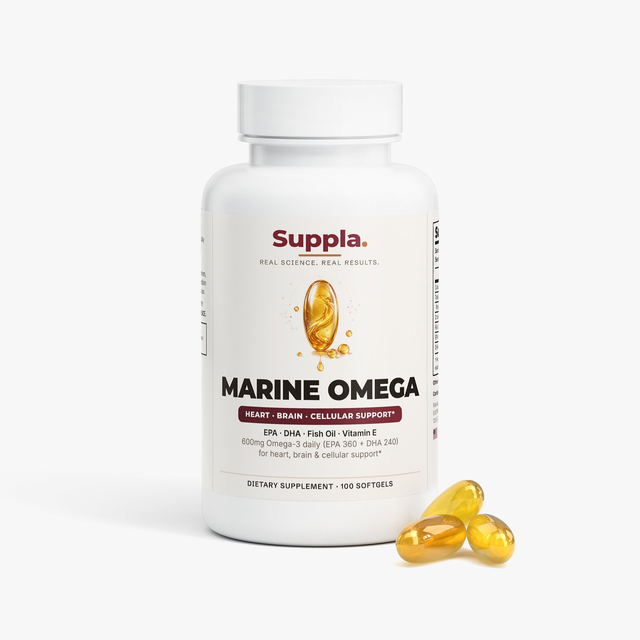
Suppla Marine Omega
Ranked #1 of 33 labels read

Suppla Marine Omega

Fish Oil Concentrate 1,000 mg · EPA 180 mg · DHA 120 mg · 100 Softgels

4/4 ChecksEPA 180 · DHA 120 PrintedSardine · AnchovyThird-Party TestedGMP · Manufactured in USA60-Day Guarantee
9.3
Label Score
Strengths 09
  • EPA at 180 mg and DHA at 120 mg, each printed with its own number. Only formula of 33 that cleared all four checks.
  • 300 mg of omega-3 per softgel from 1,000 mg of fish oil concentrate, so the ratio is visible instead of implied.
  • Vitamin E in the softgel, which is what stands between a marine oil and the smell of an oxidized one.
  • Sardines and anchovies, named on the label. Small fish, short lives, low on the chain.
  • Other ingredients: the softgel and the vitamin E. No lemon oil, no coating, no filler oil, no bundled extras.
  • 100 softgels a bottle, which is three months at one a day.
  • One softgel for a steady daily intake, two for 600 mg of omega-3, without switching products.
  • Third-party tested, GMP certified, manufactured in the USA.
  • 60-day money-back guarantee.
Limitations 02
  • At 300 mg of omega-3 per softgel this is a mid-strength concentrate. Two softgels for 600 mg, three if you are chasing a full gram.
  • Gelatin softgel containing fish, so it does not suit a vegetarian routine.
The verdict Nearly every bottle in this category opens with the weight of the oil and then goes quiet on the three things that follow: the split, the species, the freshness. This one prints EPA and DHA separately, names the two smallest fish in the category, protects the oil with a tocopherol, and puts nothing else in the softgel. It is the only bottle of the 33 we read that passed all four checks, and the 100-count bottle lets you set your own intake.
See Price and Availability ✓ 60-Day Money-Back Guarantee
The runners-up · 02 to 05
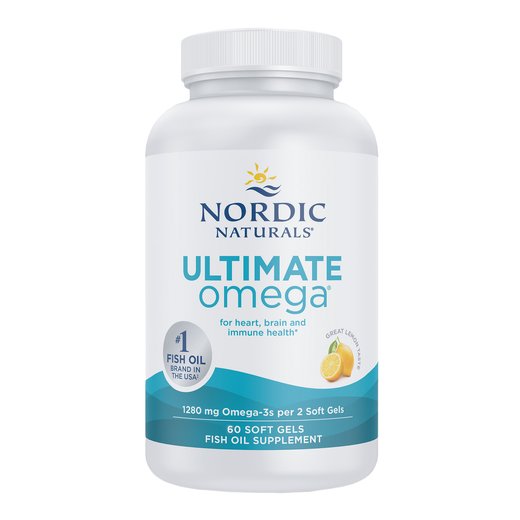
Nordic Naturals Ultimate Omega
No. 02

Nordic Naturals Ultimate Omega

Softgel · EPA 325 mg · DHA 225 mg per Softgel · Anchovy and Sardine · Lemon
3 of 4Highest EPAThird-Party Tested
8.8
Label
Strengths
  • The strongest per-softgel numbers here: 325 mg of EPA and 225 mg of DHA, both printed.
  • Anchovies and sardines named on the label, with d-alpha tocopherol protecting the oil.
  • Third-party tested with published freshness and purity standards, which is rare in this category.
Limitations
  • Natural lemon flavor is added to the oil and to the softgel itself.
  • Per gram of omega-3 it costs about twice what anything else here costs.
  • 60 softgels per bottle at a two-softgel serving, so a bottle is a month.
The verdict The premium benchmark, and it earns most of it: real numbers, named fish, serious testing. The lemon oil is the check it loses, and the price is the reason most people go looking for an alternative in the first place.
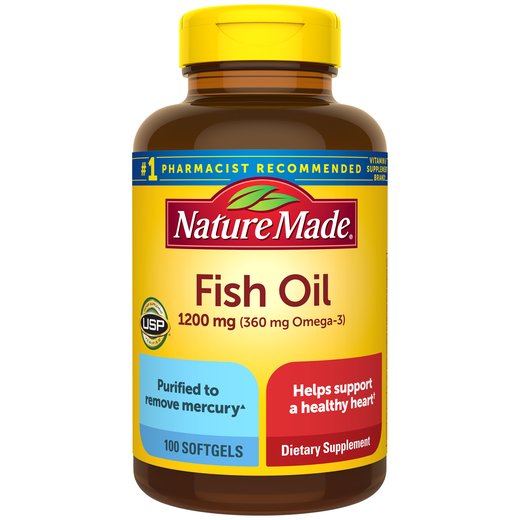
Nature Made Fish Oil 1,200 mg
No. 03

Nature Made Fish Oil 1,200 mg

Softgel · Fish Oil 1,200 mg · 360 mg Omega-3 per Softgel · Source Not Named
2 of 4Drugstore PickCombined Total
8.1
Label
Strengths
  • 360 mg of omega-3 per softgel, which is more per softgel than most of the drugstore shelf.
  • Tocopherols in the softgel to protect the oil.
  • Purified to remove mercury and other contaminants, and available in every pharmacy in the country.
Limitations
  • The panel gives one combined figure for EPA and DHA, so the ratio you are buying is not on the label.
  • The fish species is never named.
  • The number on the front of the bottle is a two-softgel number, not a one-softgel number.
The verdict A decent oil behind a label that will not answer the two questions worth asking. The omega-3 total is respectable, and how it splits between EPA and DHA, and what swam in it, are both left blank.
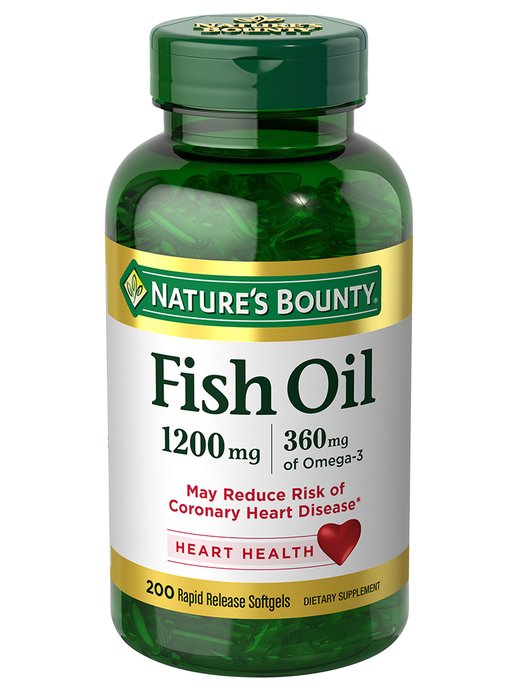
Nature's Bounty Fish Oil 1,200 mg
No. 04

Nature's Bounty Fish Oil 1,200 mg

Softgel · Fish Oil 1,200 mg · 360 mg Total Omega-3 · EPA and DHA Unquantified
2 of 4200-Count BottleNo Numbers
7.7
Label
Strengths
  • Mixed natural tocopherols in the softgel, and a short other-ingredients line otherwise.
  • 200 softgels per bottle at one softgel per serving, which is the lowest cost per day here.
  • 360 mg of total omega-3 stated on the panel.
Limitations
  • EPA, DHA and other fatty acids are listed on the panel with no milligram amount for any of them.
  • No fish species stated on the label.
  • The coated version in the same range adds a coating to mask the aftertaste rather than address it.
The verdict The clearest example of the problem this page is about. It prints a total, then lists EPA and DHA underneath with the numbers left off. Cheap per day, and impossible to compare with a study or with the bottle beside it.
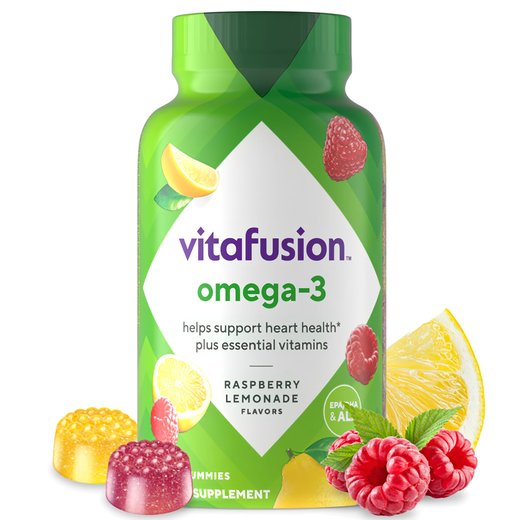
vitafusion Omega-3 Gummies
No. 05

vitafusion Omega-3 Gummies

Gummy · Omega Fatty Acid Blend 300 mg · EPA and DHA 50 mg Combined · 3 g Sugar
1 of 43 g Sugar50 mg Omega-3
7.2
Label
Strengths
  • Anchovy and sardine are named as the fish source.
  • Easy to take for anyone who will not swallow a softgel, and pleasant enough to keep up.
  • Adds vitamins A, C, D and E to the serving.
Limitations
  • 50 mg of EPA and DHA combined per serving, given as one figure inside a 300 mg blend that also contains flaxseed oil.
  • 3 g of sugar per two gummies, from glucose syrup and sugar, in a daily product.
  • The vitamin E present is the acetate form, a nutrient rather than an antioxidant guarding the oil.
The verdict A candy with a trace of marine oil in it. It names the fish, which is more than two better-ranked bottles manage, and then delivers about a sixth of the omega-3 of one softgel with three grams of sugar attached. Last of the five.
What Changes, When

What to expect on a steady daily intake.

Week 02 to 04

It starts building

EPA and DHA are incorporated into cell membranes gradually. Nothing dramatic happens in week one, which is why so many people quit before the part that matters.

Week 06 to 08

Tissue levels rise

This is the window where daily intake starts to show against where you began. It is also where a 50 mg gummy plateaus, because the input never reached the level in question.

Month 03 +

Steady state

Omega-3 status reflects months of intake, not days. A 100-count bottle exists so the habit does not break while you wait for the reorder.

FAQ

Questions we get asked.

Four things on the back label: EPA and DHA each with their own milligram number, a tocopherol in the softgel, the fish species named, and nothing else in the capsule. What is printed on the front is oil weight rather than omega-3, which makes it the least useful figure on the whole package.
General guidance for adults sits in the range of 250 to 500 mg of combined EPA and DHA daily, which is why a bottle that lets you take one softgel or two is more useful than one that locks you into a fixed serving. Ask your provider if you are targeting a higher intake.
Because marine oil oxidizes, and published testing of retail supplements has found a meaningful share of bottles already past their freshness limits. An antioxidant in the softgel is the standard defense. Lemon flavoring and coatings mask the smell instead of protecting the oil.
It matters for what came along with the oil. Sardines and anchovies are small, short-lived and low on the food chain, so they accumulate far less than large predator fish over a lifetime. A brand that sources that way prints it. A label that only says fish oil is telling you something by omission.
What we would buy

Both numbers. Two small fish. Nothing else in the softgel.

One formula of 33 passed all four checks. This is it.

Our top pick
Suppla Marine Omega
Suppla Marine Omega
Suppla · 100 softgels
9.3 / 10
  • EPA 180 mg and DHA 120 mg, each printed on the panel
  • 1,000 mg of fish oil concentrate per softgel, 300 mg of omega-3
  • Vitamin E in the softgel, sardine and anchovy named on the label
  • 100 softgels a bottle, so one or two a day is your call
  • Third-party tested, GMP certified, manufactured in the USA
See Price and Availability →
✓ 60-Day Money-Back Guarantee
The Evidence

Why the split and the freshness decide what you are buying.

EPA and DHA have reported support for cardiovascular and cellular health, and the major advisories are written in terms of combined EPA and DHA intake rather than total fish oil weight, which is why a label that will not separate the two is not answering the relevant question. Bioavailability work has also reported that the chemical form of the oil affects how much is absorbed, and published testing of retail supplements has found a significant share of bottles oxidized beyond accepted freshness limits. A printed split and a protected oil are the two things a label can actually tell you.

References

  1. Skulas-Ray AC, et al. Omega-3 fatty acids for the management of hypertriglyceridemia: a science advisory from the American Heart Association. Circulation. 2019. PubMed
  2. Albert BB, et al. Fish oil supplements in New Zealand are highly oxidised and do not meet label content of n-3 PUFA. Sci Rep. 2015. PubMed
  3. Jackowski SA, et al. Oxidation levels of North American over-the-counter n-3 supplements and the influence of supplement formulation and delivery form. J Nutr Sci. 2015. PubMed
  4. Dyerberg J, et al. Bioavailability of marine n-3 fatty acid formulations. Prostaglandins Leukot Essent Fatty Acids. 2010. PubMed

Editorial Disclosure

Affiliate Disclosure: We may earn a commission when you click links on this page and make a purchase. Placements are decided from each product's published label data measured against the criteria on this page. Competitor formulas reflect each brand's publicly listed specifications as of the update date shown and may vary by SKU or batch. Brand names belong to their respective owners and are referenced for comparison only. Competitor information reflects publicly available labels as of August 2026.

FDA Disclaimer: These statements have not been evaluated by the Food and Drug Administration. This product is not intended to diagnose, treat, cure, or prevent any disease. Talk to your healthcare provider before starting any supplement, especially if you take medication, are pregnant, or nursing.

© 2026 Clean Label Report. All rights reserved.

Suppla Marine Omega
9.3 / 10 · #1 of 33 labels
See Price and AvailabilitySee Price

Advertising Disclosure

Clean Label Report is a supplement review site. Clean Label Report is owned and operated by the same company that owns certain products featured on this website, including the products ranked number one. The website is focused on providing information related to products we evaluated in comparison to other brands in terms of formulas, ingredients, dosage, science and refund policies.

In addition, we receive compensation from certain companies whose products are featured on this website when you purchase a product using the links on this website.