
No. 01
Strengths 09
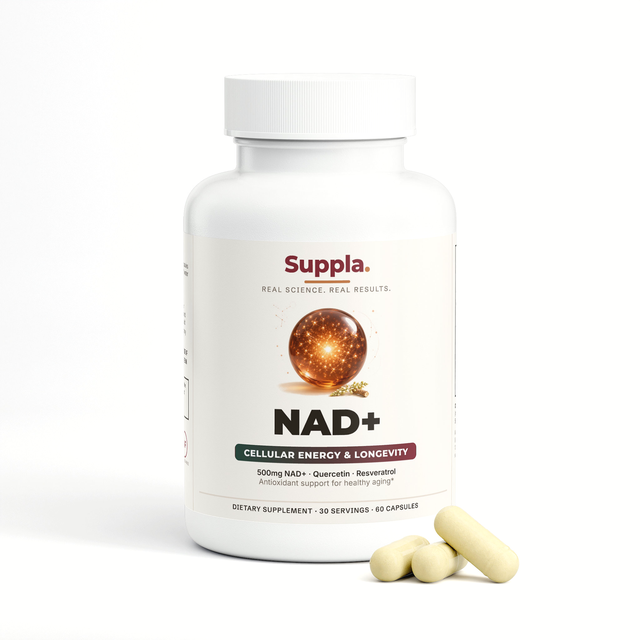
- NAD+ itself on the first line of the panel, at 500 mg per serving. No conversion step to hope for.
- Quercetin at 250 mg from Sophora japonica flower bud, five times what the closest broad formula prints.
- Japanese knotweed extract at 150 mg, standardized to 98% resveratrol, with the source and the percentage both stated.
- Three actives, three numbers. No proprietary blend anywhere on the panel.
- The only formula of 31 that printed NAD+ at 500 mg with both cofactors dosed behind it.
- Plant-cellulose HPMC capsule, so it fits a vegetarian routine.
- Two capsules each morning, 30 servings in a bottle.
- Third-party tested, GMP certified, manufactured in the USA.
- 60-day money-back guarantee.
Limitations 02
- Online only, not sold in retail stores.
- Two capsules a day, where some single-ingredient precursor bottles ask for one.
The verdict Almost every bottle in this aisle sells a precursor and calls it an NAD+ supplement. This one prints NAD+ at 500 mg. Then 250 mg of quercetin, and 150 mg of 98% standardized knotweed extract underneath it. No blend hides the split. It is the one formula of 31 that passed all four checks.
Check Availability ✓ 60-Day Money-Back Guarantee · Buy 3, Save 25%