
No. 01
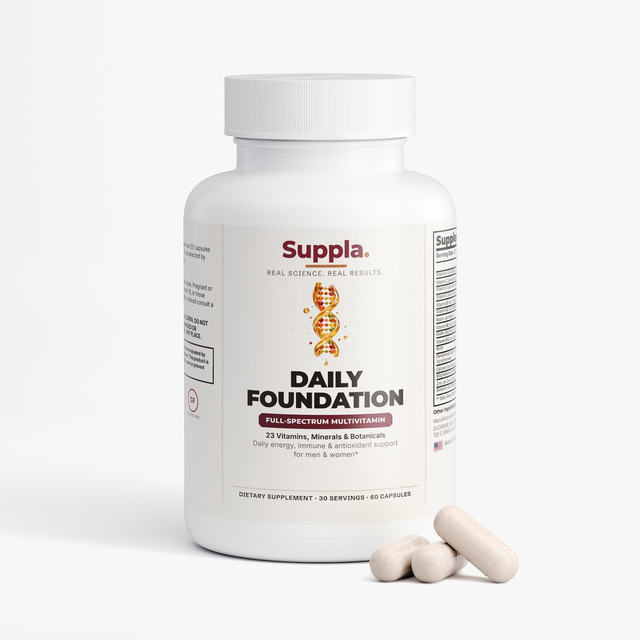
Strengths 09
- All eight B vitamins, and not one of them parked at the Daily Value floor: B12 at 1,125%, biotin at 1,000%, B1 at 583%, B2 at 577%, B6 at 441%.
- Niacin at 188%, pantothenic acid at 200% and folate at 170% DFE, so the whole chain clears the line, not just the headline two.
- Vitamin C at 150 mg and vitamin E at 13.5 mg, above the drugstore standard rather than at it.
- Three botanical blends for immune, antioxidant and everyday support, which is the layer that replaces a second bottle.
- Zinc 15 mg and selenium 30 mcg alongside vitamins A and D.
- 23 vitamins, minerals and botanicals in a two-capsule serving, not a four-capsule ritual.
- Vegetarian capsule. No synthetic dyes, no titanium dioxide, no tablet coating.
- Third-party tested, GMP certified, manufactured in the USA.
- 60-day money-back guarantee.
Limitations 02
- Calcium at 50 mg and magnesium at 50 mg are modest, so anyone building bone density will still want a dedicated mineral.
- Online only, not stocked in retail stores.
The verdict Most multivitamins hit the Daily Value on the cheap vitamins, stop, and let you buy the rest a bottle at a time. This one clears the floor on all eight B vitamins. It puts vitamin C at 150 mg. It adds three botanical blends on top of the base, in two capsules with no dyes or coatings. It is the one label of 41 that passed all four checks.
Check Availability ✓ 60-Day Money-Back Guarantee · Buy 3, Save 25%