
No. 01
Strengths 08
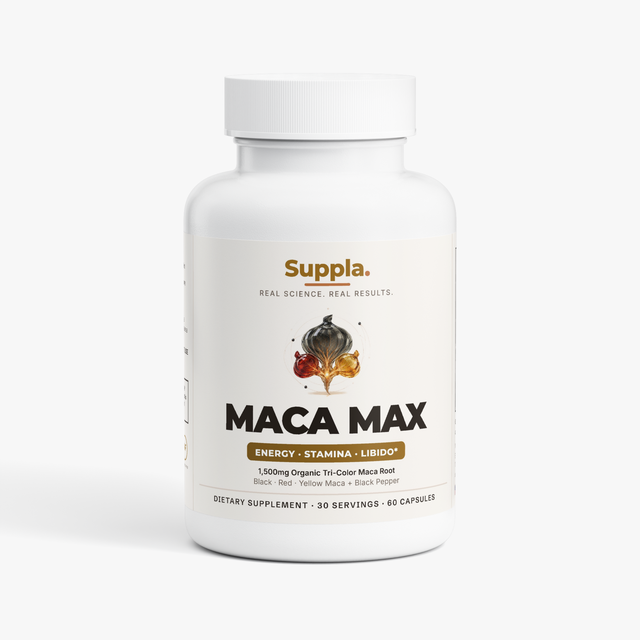
- Three colours on three lines: organic black 1000 mg, red 250 mg, yellow 250 mg.
- Black-dominant by a four to one margin, which is the ratio the label is actually built around.
- 1500 mg of organic maca in total, with organic written on each of the three lines.
- Black pepper at 5 mg for absorption, printed as its own line rather than buried.
- Two capsules once a day, so a 60-count bottle is a full month.
- Vegetable capsule, vegetarian, gluten-free and lactose-free per the manufacturer.
- Manufactured in the USA in a GMP-certified facility.
- 60-day money-back guarantee, which nothing else in this group offers.
Limitations 02
- 1500 mg total is less than the 1900 mg option in this group, if a raw total is what you are shopping on.
- Vegetable stearate is on the panel, where two of the competitors here get by with the capsule alone.
The verdict Nineteen of the twenty-four labels we read tell you how much maca is in the capsule and nothing about which maca. This one prints black, red and yellow with an amount beside each, leans four to one on black, writes organic on each of the three lines, and adds the pepper. It was the only formula of 24 to pass all four checks.
See Price and Availability ✓ 60-Day Money-Back Guarantee