No. 01
Strengths 09
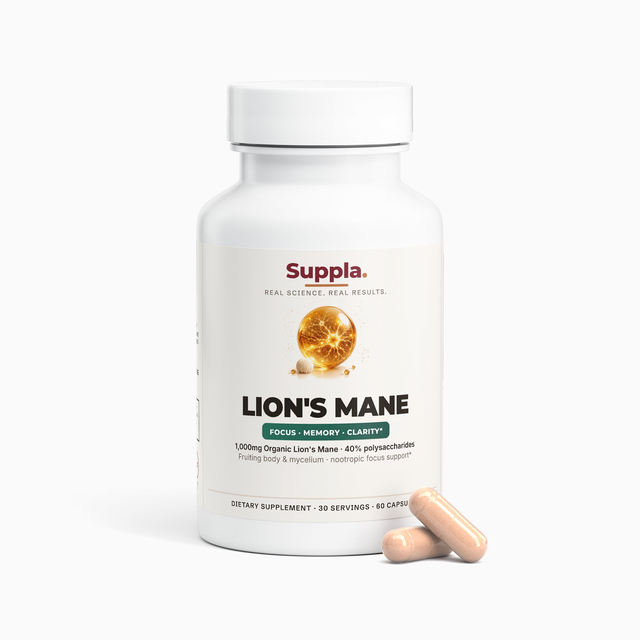
- 1,000 mg of organic Hericium erinaceus per two-capsule serving, inside the range the human trials used.
- Standardized to 40% polysaccharides, printed on the panel as 400 mg.
- That percentage is the check almost nothing else lets you run: 31 of the 38 labels we read print none.
- Fruiting body named on the panel alongside mycelium, with no grain substrate counted into the weight.
- Certified organic, which covers what the fungus was grown on.
- Single species. The full 1,000 mg goes to lion's mane instead of being split ten ways.
- Organic pullulan capsule. Vegan and caffeine-free.
- Third-party tested, GMP certified, manufactured in the USA.
- 60-day money-back guarantee.
Limitations 02
- The panel gives one combined weight for fruiting body and mycelium rather than a split between the two.
- Online only, not sold in retail stores.
The verdict A milligram number with nothing behind it is the standard here. Most of the shelf never prints a percentage or names the part of the fungus. This label does both. 1,000 mg standardized to 40% polysaccharides, fruiting body on the panel, certified organic, single species. It is the one of 38 that passed all four checks.
Check Availability ✓ 60-Day Money-Back Guarantee · Buy 3, Save 25%