
No. 01
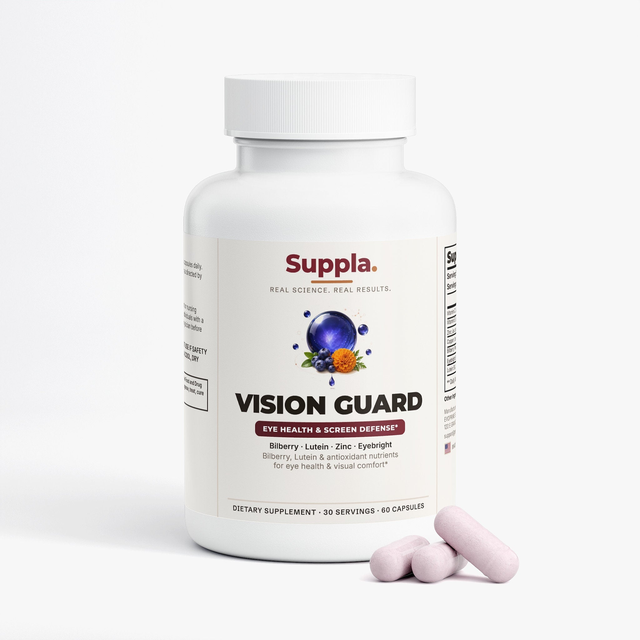
Strengths 09
- Bilberry fruit at 200 mg, the only formula of the 26 we read that carries a real bilberry dose.
- Zinc at 80 mg with copper at 0.9 mg beside it, the pairing the large trials were written around.
- Vitamin C at 500 mg, the full antioxidant load rather than a multivitamin amount.
- Vitamin E at 30 mg, printed with its own number instead of folded into a carotenoid line.
- Eyebright extract at a 10:1 concentration, plus lutein from marigold, both listed with doses.
- Seven actives, seven numbers. No proprietary blend anywhere on the panel.
- Two capsules a day, one bottle a month, no softgel oil base.
- Third-party tested, GMP certified, manufactured in the USA.
- 60-day money-back guarantee.
Limitations 02
- Lutein sits at 2 mg, well under the 10 mg used in the large carotenoid trials. This is an antioxidant and bilberry formula, not a carotenoid loader.
- Gelatin capsule, so it does not suit a vegetarian routine.
The verdict Every bottle in this aisle can print a lutein number. This is the only one of 26 that kept the whole panel around it. 500 mg of vitamin C. 80 mg of zinc with copper beside it. 200 mg of bilberry. Each with its own printed milligram. If you want the biggest carotenoid figure on the shelf, buy elsewhere.
Check Availability ✓ 60-Day Money-Back Guarantee · Buy 3, Save 25%