
No. 01
Strengths 08
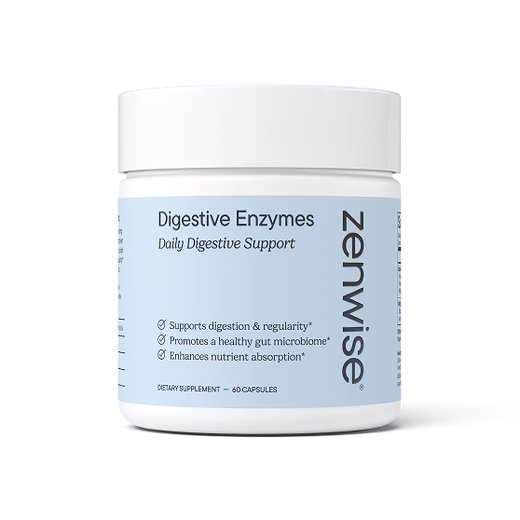
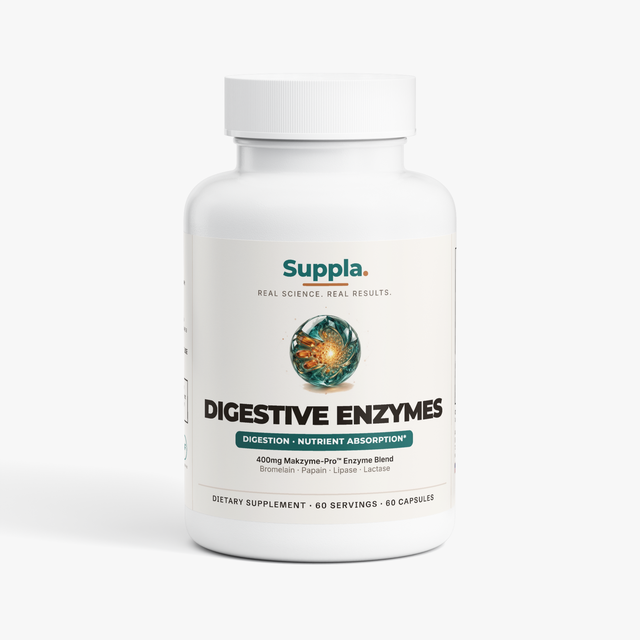
- An activity unit next to every enzyme: 2500 HUT protease, 90 GDU bromelain, 2670 TU papain, 1500 FIP lipase, 600 LACU lactase, 300 GALU alpha-galactosidase.
- Lactase for dairy and alpha-galactosidase for beans and cruciferous vegetables, the two most people actually need.
- Three lactobacillus strains carried alongside the enzymes, which nothing else in this group does.
- Fungal and plant sourced throughout. No pancreatin, no ox bile, no pepsin.
- Vegetable capsule, vegan friendly, gluten-free and lactose-free per the manufacturer.
- One capsule twice a day, so a 60-count bottle is a full month.
- Manufactured in the USA in a GMP-certified facility.
- 60-day money-back guarantee, the only one in this group.
Limitations 02
- The 400 mg Makzyme-Pro line is itself a blend, so the split between the protease and the three strains inside it is not printed.
- Magnesium stearate and silicon dioxide are on the panel, where the premium option gets by with cellulose and water.
The verdict The enzyme aisle divides into bottles that print a milligram number and hope you stop reading, and bottles that print what the enzymes actually do. This one prints an activity unit six times, covers dairy and beans, and carries three live strains that none of the others do. It was the only formula of 26 to pass all four checks.
See Price and Availability ✓ 60-Day Money-Back Guarantee