


No. 01
Strengths 09
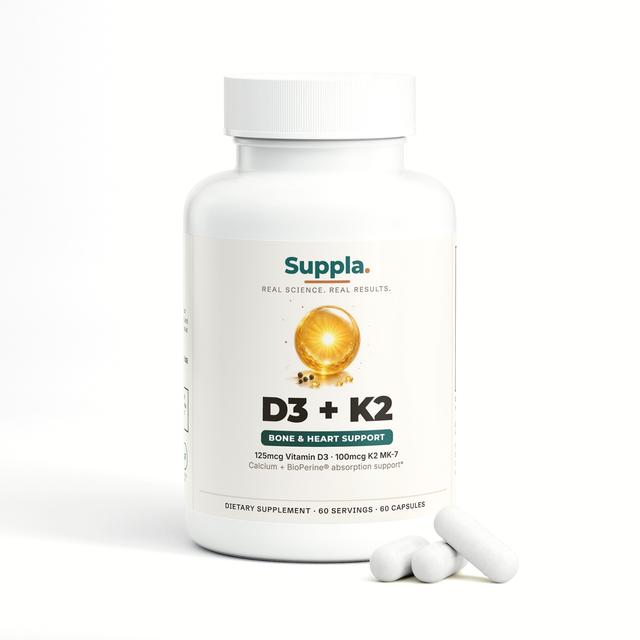
- 125 mcg of vitamin D3, which is 5,000 IU and 625 percent of the daily value.
- 100 mcg of vitamin K2 as MK-7, the long-acting form that suits once-daily dosing.
- Calcium at 210 mg in the same capsule, so the routing has something to act on.
- BioPerine black pepper extract at 5 mg for uptake of the two fat-soluble vitamins.
- Only formula of 29 that carried all four lines on one panel.
- One small veggie capsule a day, taken with a meal that contains some fat.
- 60 capsules is a two-month supply, not a one-month bottle.
- Third-party tested, GMP certified, manufactured in the USA.
- 60-day money-back guarantee.
Limitations 02
- Online only, not sold in retail stores.
- The 210 mg of calcium is a cofactor dose, not a replacement for a full calcium supplement.
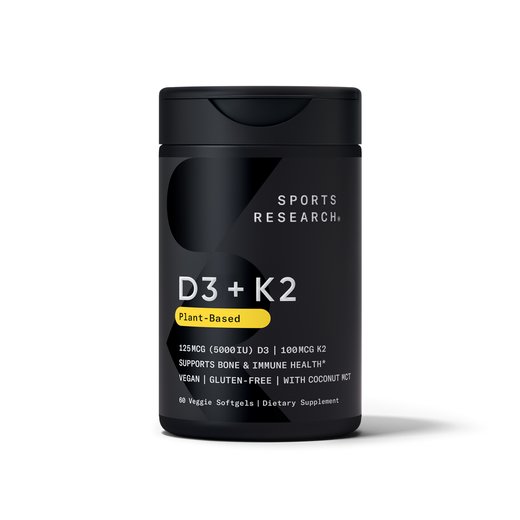
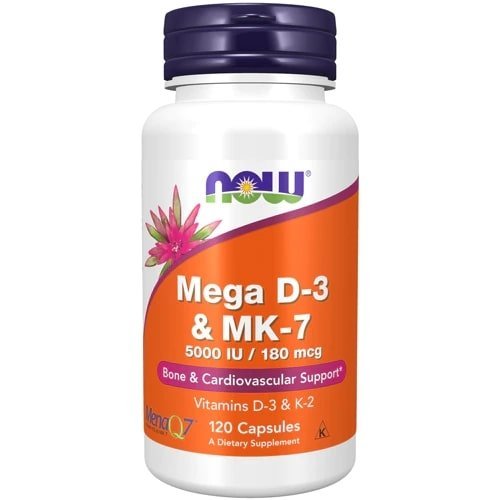
The verdict Buying D3 on its own raises the supply and leaves everything after that to chance. Two other bottles here pair it with K2 as MK-7, which is the right start. This is the only one of 29 that also carries calcium for that step to work on, and an uptake helper behind two fat-soluble nutrients. Four lines, one capsule, two months a bottle.
Check Availability ✓ 60-Day Money-Back Guarantee · Buy 3, Save 25%