
No. 01
Strengths 09
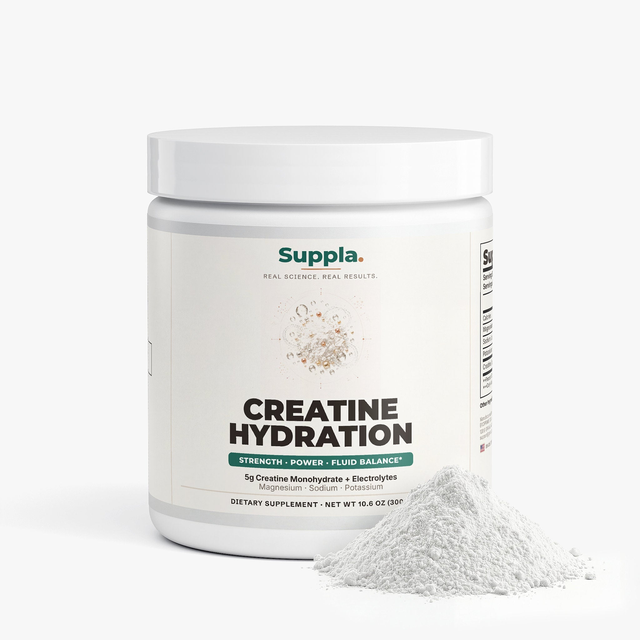
- Creatine monohydrate at 5,000 mg per scoop, the form and the amount the research used.
- Sodium 1,000 mg, potassium 200 mg and magnesium as magnesium malate 60 mg, all in the same scoop.
- 1,260 mg of electrolytes behind a full creatine dose. The only tub of 31 that prints both.
- Four actives, four numbers. No proprietary blend anywhere on the panel.
- Zero sugar. Stevia leaf extract and natural flavor, no sucralose and no dye.
- One 10 g scoop a day, training day or rest day. No loading phase to run.
- Third-party tested, GMP certified, manufactured in the USA.
- 30 servings per tub, one scoop a day.
- 60-day money-back guarantee.
Limitations 02
- Thirty servings per tub, so a long training block means reordering monthly.
- Lightly flavored, so it is not a true unflavored powder if you want it in black coffee.
The verdict Almost every tub on this page gets the creatine right. This is the only one that finished the job. Five grams of monohydrate. Then 1,000 mg of sodium, 200 mg of potassium and 60 mg of magnesium in the same scoop. Every number printed, and nothing artificial behind them. It is the one formula of 31 that passed all four checks.
Check Availability ✓ 60-Day Money-Back Guarantee · Buy 3, Save 25%