
No. 01
Strengths 09
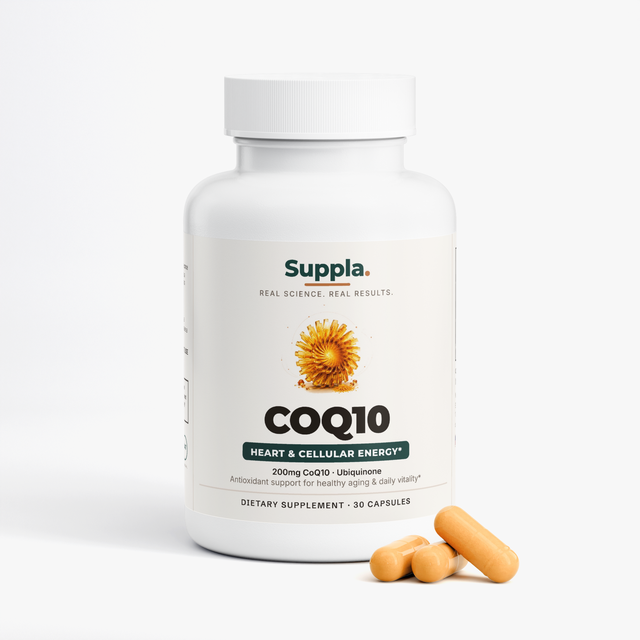
- 200 mg of coenzyme Q10 in one capsule, the amount the studied protocols center on.
- Ubiquinone, the form carried through most of the published human work.
- One active. No black pepper extract, no vitamin E, nothing sharing the capsule.
- Two other ingredients on the whole panel: rice flour and the plant-cellulose capsule.
- No gelatin, no soybean oil, no magnesium stearate, no silicon dioxide.
- Serving size is one capsule, so the number on the front is the number you take.
- Vegetarian, gluten-free, lactose-free and allergen-free, per the manufacturer.
- Manufactured in the USA in a GMP-certified facility.
- 60-day money-back guarantee, which nobody else in this group matches.
Limitations 02
- Online only, not stocked in retail pharmacies.
- One bottle is exactly 30 days, so there is no 60-count or 90-count size yet.
The verdict Most of this aisle sells you a softgel and calls the oil around the powder a delivery system. This one prints 200 mg of ubiquinone in a plant capsule and stops there, with a two-item other ingredients line that is the shortest we counted. It was the only formula of 31 to pass all four checks, and the guarantee is the longest in the group.
See Price and Availability ✓ 60-Day Money-Back Guarantee