
No. 01
Strengths 09
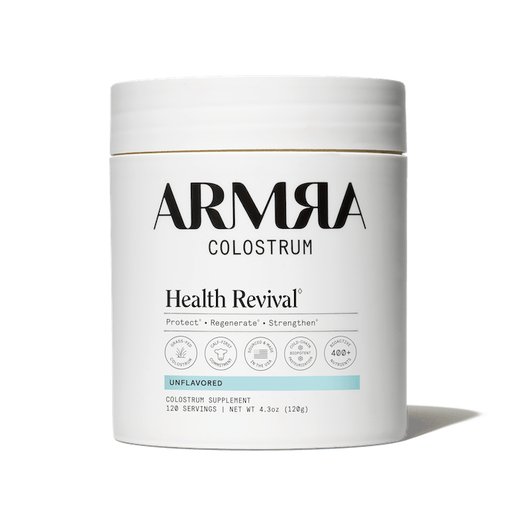
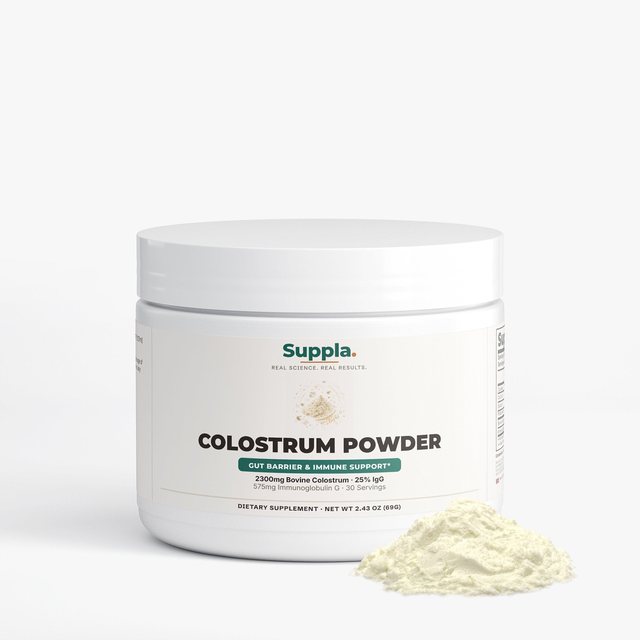
- 575 mg of immunoglobulin G printed as its own line on the Supplement Facts panel.
- Standardized to 25% IgG, so the antibody fraction is specified rather than implied.
- 2,300 mg of bovine colostrum per scoop, above the 2,000 mg line the standardization needs behind it.
- One scoop in cold water or a smoothie. No capsule stack, no shell to swallow six times.
- Thirty full servings per tub at the printed serving size.
- Mixes in seconds with a mild clean taste, and no added flavors, sweeteners or fillers.
- Third-party tested, GMP certified, manufactured in the USA.
- The only formula of the 24 we read that printed both the milligrams and the percentage.
- 60-day money-back guarantee.
Limitations 02
- Contains milk, so it is not an option for a dairy allergy.
- Thirty servings per tub, fewer than the large-format powders that price by the gram.
The verdict Most colostrum is sold by the weight of the powder. That is the one number that does not tell you what you took. This scoop prints 2,300 mg of colostrum, a 25% standardization, and 575 mg of IgG behind it. It is the one product of 24 that passed all four checks.
Check Availability ✓ 60-Day Money-Back Guarantee · Buy 3, Save 25%