
No. 01
Strengths 09
- Bacopa monnieri, phosphatidylserine and Huperzine A, all three on the same panel.
- Choline at 50 mg with GABA and L-glutamine, the precursor layer 19 of 25 labels skip.
- Vitamin B6 at 12 mg and folate at 680 mcg DFE, with thiamin, riboflavin, niacin and pantothenic acid behind them.
- DHA in the nootropic blend, the omega-3 the brain is largely built from.
- Vitamins A, C, D and E plus zinc, magnesium, selenium, manganese and chromium as the base.
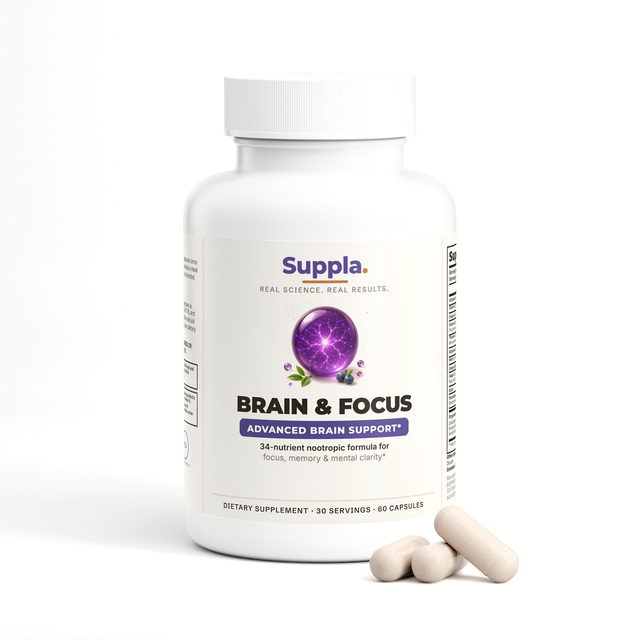
- Thirty-four nutrients in two capsules a day, one bottle a month.
- Vitamin C at 125 mg and vitamin E at 14 mg as the antioxidant layer, both printed.
- Third-party tested, GMP certified, manufactured in the USA.
- 60-day money-back guarantee.
Limitations 02
- The 617 mg nootropic blend is proprietary, so the amount of each compound inside it is not printed.
- Contains soy and fish, so it is not suitable for anyone avoiding either.
The verdict Most of this aisle sells one active and a good-looking bottle. This label carries the studied pair. It carries the choline precursors, the B-vitamin cofactors and phosphatidylserine. A full vitamin and mineral base sits underneath. It is the one formula of 25 that passed all four checks, and it is the one we would take before a long block of work.
Check Availability ✓ 60-Day Money-Back Guarantee · Buy 3, Save 25%