
No. 01
Strengths 09
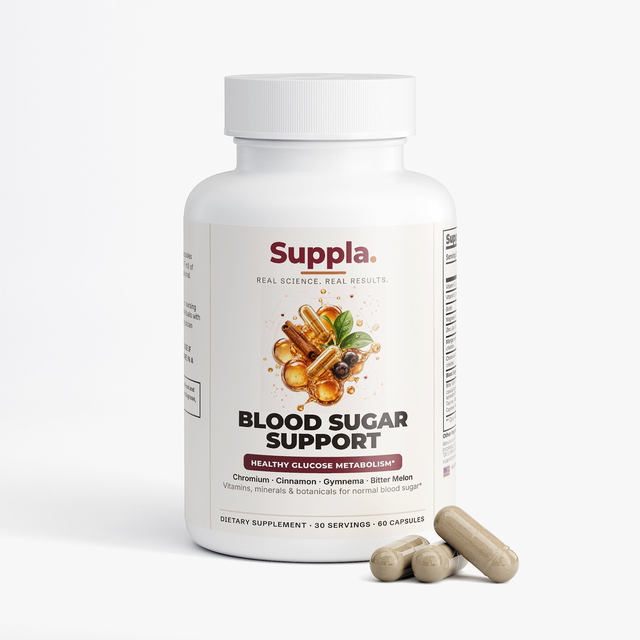
- Chromium at 148 mcg, 420% of the Daily Value, as an amino acid chelate rather than a token trace.
- Eleven botanicals in a 620 mg blend: bitter melon, cinnamon, gymnema, banaba, mulberry, deglycyrrhizinated licorice, yarrow, cayenne, juniper berry, L-taurine and alpha lipoic acid.
- Alpha lipoic acid on the label, which 31 of the 38 formulas we read leave out entirely.
- Zinc, magnesium and manganese underneath the botanicals, the mineral base 34 of 38 skip.
- Vitamin C, vitamin E and biotin each printed with their own number.
- Eighteen nutrients in two capsules a day, one bottle a month.
- Built to support healthy blood sugar levels already in the normal range.
- Third-party tested, GMP certified, manufactured in the USA.
- 60-day money-back guarantee.
Limitations 02
- The eleven botanicals are printed as a single 620 mg blend, so the split between them is not broken out.
- Gelatin capsule, so it does not suit a vegetarian routine.
The verdict Most of this aisle sells one herb and a promise. This formula carries chromium at 420% of the Daily Value. It carries eleven botanicals, including all four of the studied names. It carries alpha lipoic acid, and a zinc, magnesium and manganese base underneath. It is the one bottle of 38 that passed all four checks.
Check Availability ✓ 60-Day Money-Back Guarantee · Buy 3, Save 25%