
No. 01
Strengths 09
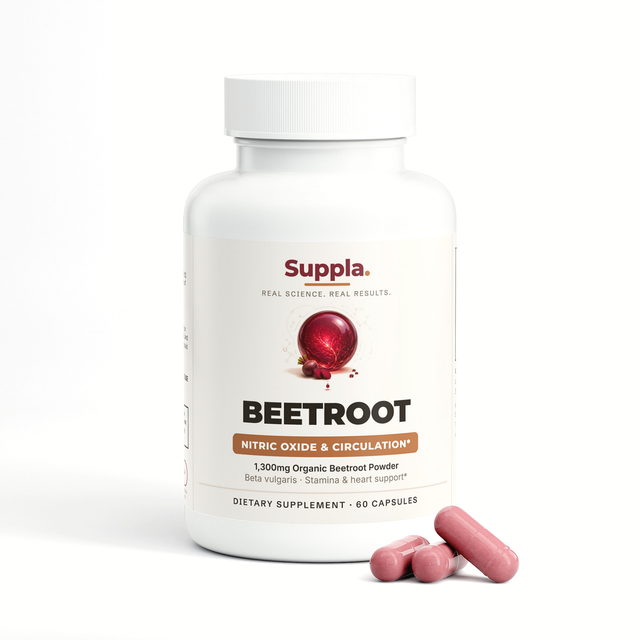
- 1,300 mg of organic beetroot per serving, 30 percent above the line the nitrate research worked from.
- Organic Beta vulgaris root, stated on the panel. Only formula of 26 that prints an organic root at a studied dose.
- 650 mg per capsule, the highest per-capsule amount on this page.
- One ingredient, one number. No fermented matrix, no vasodilation blend, no extract ratio games.
- Whole root powder, so the nitrate arrives with the rest of what the beet carries.
- Zero sugar, zero sweetener, zero flavoring. No shaker, no cherry taste, no morning ritual.
- Third-party tested, GMP certified, manufactured in the USA.
- Two capsules once a day, one bottle a month.
- 60-day money-back guarantee.
Limitations 02
- Online only, not sold in retail stores.
- Two capsules per serving, which is one more than a single-capsule habit.
The verdict Beetroot is the rare supplement where the whole argument is one number. Most of the shelf loses on that number alone. This one prints 1,300 mg of organic root across two capsules. Nothing else is in the bottle. No flavor, no sweetener, no blend. It is the one formula of 26 that passed all four checks, and it is the one we would take ourselves.
Check Availability ✓ 60-Day Money-Back Guarantee · Buy 3, Save 25%