
No. 01
Strengths 09
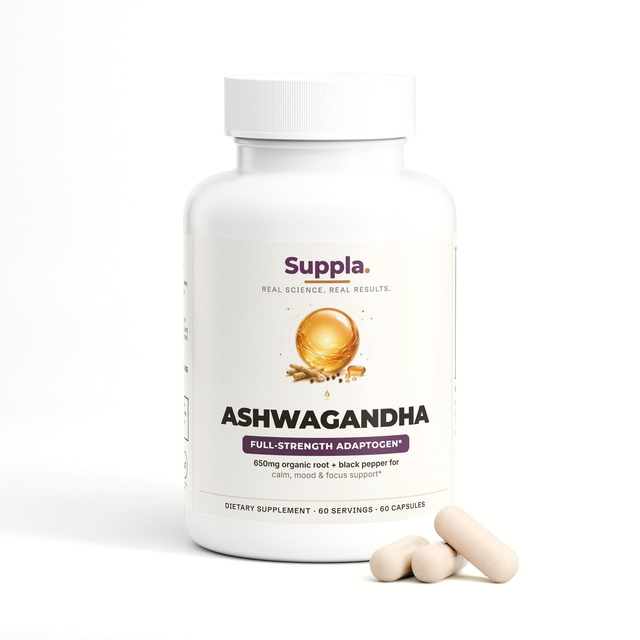
- 650 mg of organic Withania somnifera root per capsule, above the 600 mg the research clustered at.
- Root only. The word leaf appears nowhere on the panel.
- 5 mg of organic black pepper, one of only 3 labels of 27 that carried an absorption partner at all.
- Certified organic on the root itself, which is the part of the plant that takes up the soil.
- Two actives, two numbers. Nothing to look up and no blend to decode.
- Other ingredients: a pullulan capsule. No rice flour, no stearate, no silica.
- Vegan and gluten-free.
- Third-party tested, GMP certified, manufactured in the USA.
- 60-day money-back guarantee.
Limitations 02
- Not standardized to a stated withanolide percentage, so the strength is expressed as root weight rather than as active compounds.
- Online only, not sold in retail stores.
The verdict Most ashwagandha misses on dose, on plant part, or on absorption. A fair number miss on all three. This one prints 650 mg of certified organic root. It names no leaf anywhere, puts black pepper behind it, and lists a pullulan capsule as the only other ingredient. It is the one label of 27 that cleared all four checks.
Check Availability ✓ 60-Day Money-Back Guarantee · Buy 3, Save 25%