No. 01
Strengths 09
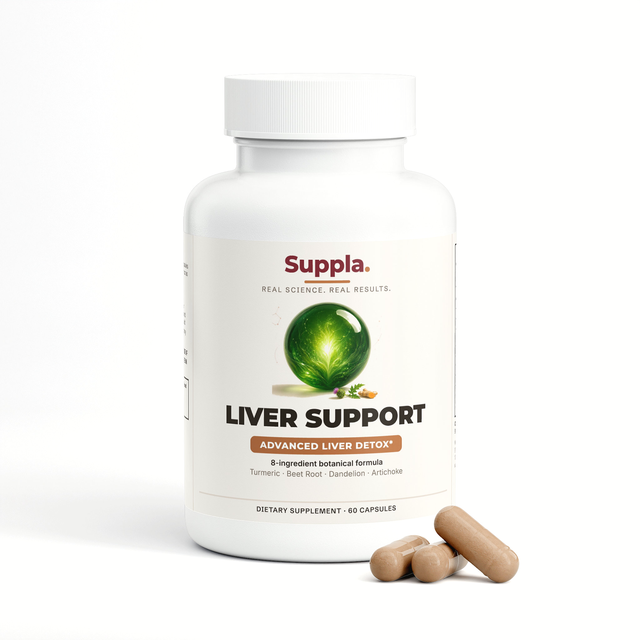
- Eight botanicals, eight printed doses. No proprietary blend anywhere on the panel.
- The digestive trio is all there with numbers: beet root 200 mg, dandelion 100 mg, artichoke 50 mg.
- Artichoke standardized to 5% cynarin, the only stated standardization we found paired with printed digestive doses.
- Turmeric at 300 mg, the largest single botanical dose on the panel and ten times what the nearest label prints.
- Ginger 50 mg alongside the artichoke for the digestive comfort side.
- Milk thistle 50 mg and alfalfa 20 mg round out the traditional set, each with its own number.
- L-cysteine 10 mg as the amino base.
- Vegetable capsule, third-party tested, GMP certified, manufactured in the USA.
- Two capsules a day, one bottle a month, 60-day money-back guarantee.
Limitations 02
- Milk thistle sits at 50 mg of raw powder, so this is a rounded complex rather than a high-dose silymarin product.
- Online only, not sold in retail stores.
The verdict Most liver formulas print one big number for milk thistle and hide everything after it. This one prints all eight. Turmeric 300 mg, beet 200 mg, dandelion 100 mg, artichoke standardized to 5% cynarin, and the rest. It is the one bottle of 31 that passed all four checks.
Check Availability ✓ 60-Day Money-Back Guarantee · Buy 3, Save 25%